Fresh orange juice is mostly water. Press four oranges and you get something bright and thin, which is lovely to drink and far too weak to survive being set into a sweet. Reduce all of it and the strength problem goes away, but so does everything that made it taste fresh. Cooked juice tastes like marmalade. Pleasant enough. It is not what a child recognises as orange.
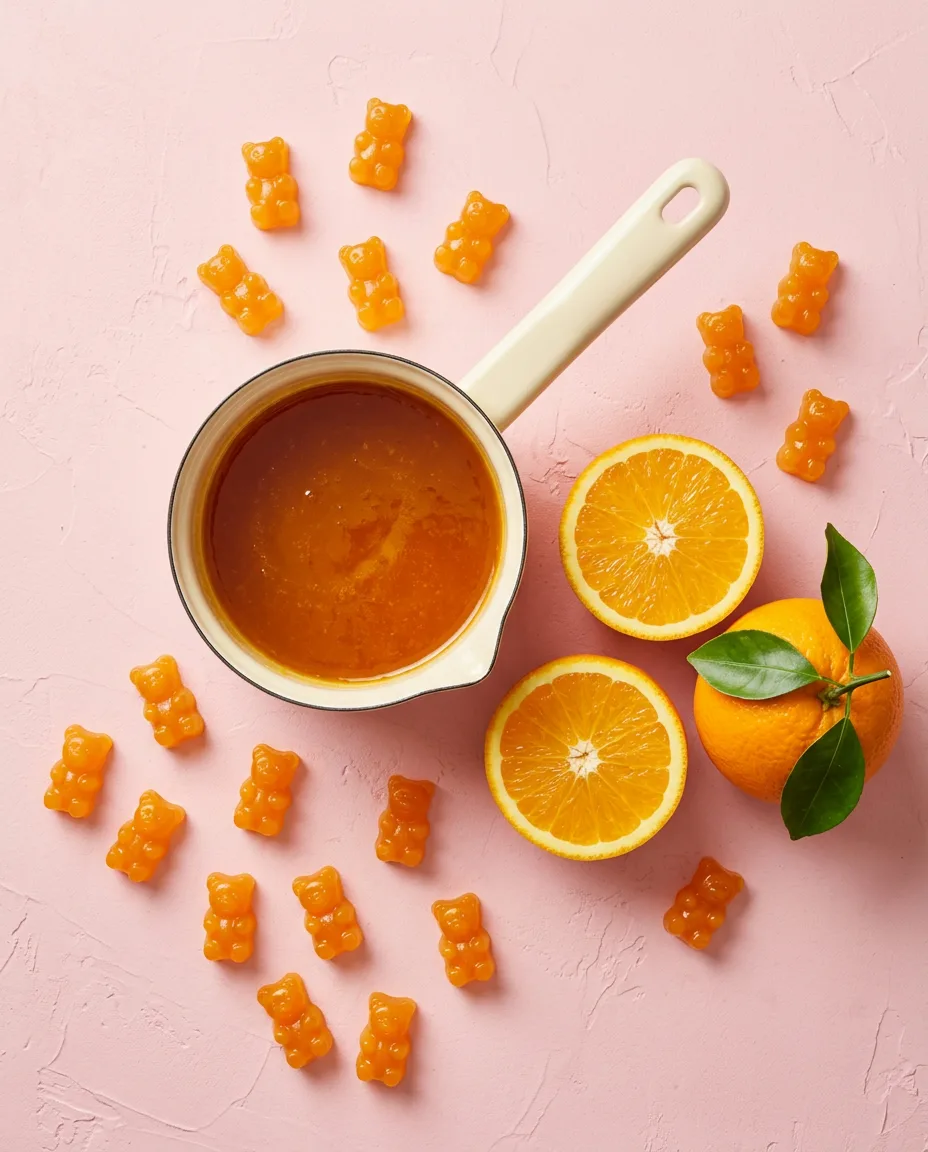
So the batch splits it. Roughly 175 g goes into the pan and comes out as 50 g of thick syrup, which is where the depth comes from. The other 125 g never sees heat, and that is where the smell comes from. Put them together off the heat and both survive.
Width matters more than heat. Surface area does the reducing, and a tall narrow saucepan takes twice as long while scorching the sugars at the base.
Watch it near the end. The last 30 g go fast, and juice that has tipped past syrup into toffee sets into something dark and bitter that no amount of honey rescues.