Chewino
Gummy Bears & Classic Shapes

5 Rules for Homemade Gummy Bears That Hold Their Shape

Shop-bought bears dry for days before anyone bags them. Five rules that get a home batch close.

Save

The bears come out of the mould looking right. Six hours later the ears have gone soft and the faces have flattened. By morning the tray holds five neat rows of something closer to jam.

That is a water problem. The gelatin is usually fine. Shop-bought bears spend three to five days drying in a warm room before anyone bags them. Drying pulls water out. The surface goes firm and the moulded detail stays sharp. A home kitchen almost always skips that step. Most recipes say chill for twenty minutes, and twenty minutes will set a gummy. It will not dry one.

Five rules below, in order of how much damage each one does when you ignore it.

The batch these rules assume

Every number that follows refers to this batch. It fills a 50-cavity bear mould twice over.

  • 120 g cold water
  • 25 g unflavoured gelatin
  • 100 g granulated sugar
  • 100 g glucose syrup
  • 60 g fruit purée or concentrate
  • 2 g citric acid
  • Neutral oil for the moulds
  1. Sprinkle the gelatin over the cold water and leave it for 10 minutes.
  2. Heat the sugar and glucose syrup together to 115°C.
  3. Take the pan off the heat and let it cool to 70°C.
  4. Stir the softened gelatin in until no grains are left on the spoon.
  5. Add the purée and the citric acid once the mix is under 60°C.
  6. Skim the foam off and fill the moulds with a squeeze bottle.
  7. Chill for 25 minutes, unmould, then dry on a rack.
1

Weigh the gelatin in grams

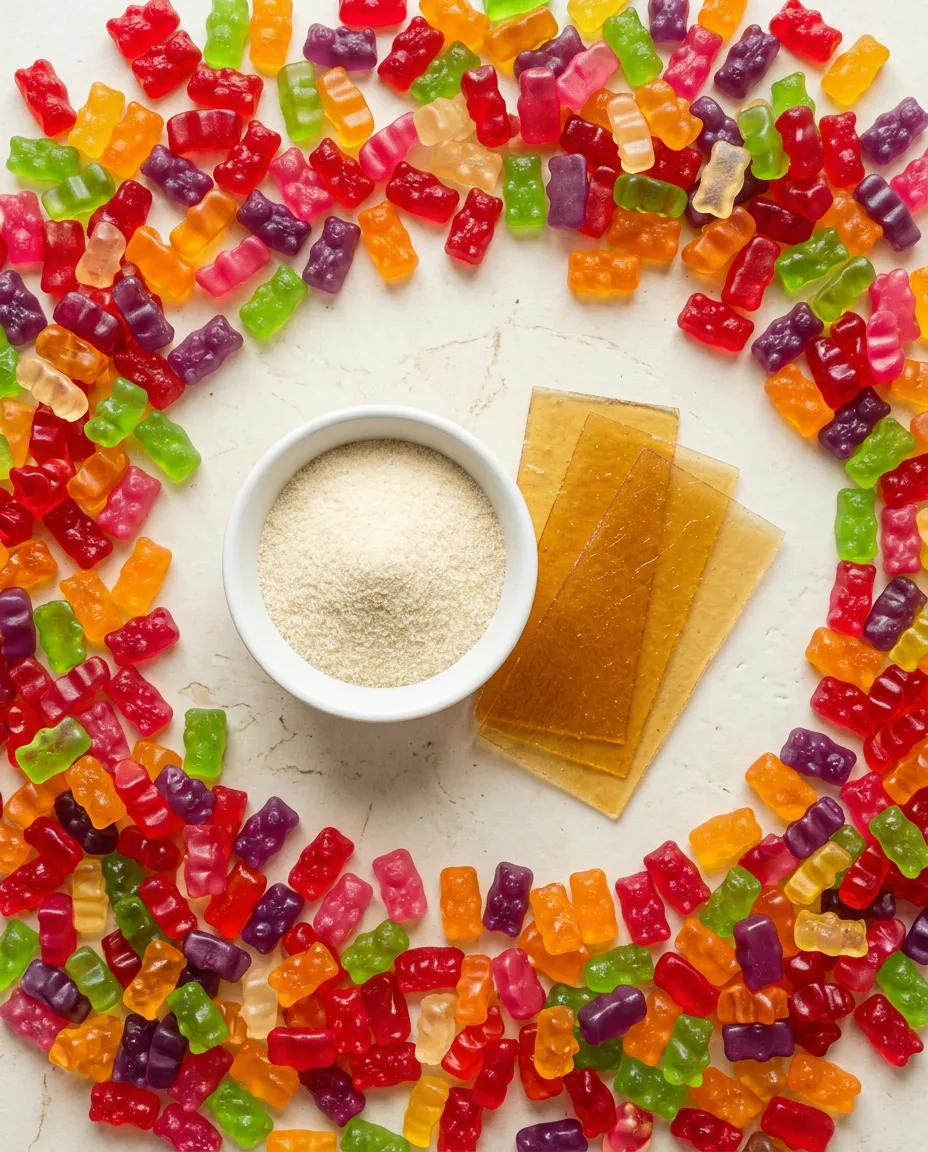
A packet is not a standard unit. One brand’s sachet holds about 7 grams. Sheet gelatin runs closer to 2 grams a sheet. They also differ in strength.

Gelatin granules and sheets surrounded by colourful gummy bearsSave

That strength is called bloom. It is a number printed on professional packaging, usually somewhere between 125 and 250. Higher bloom means a firmer set from the same weight of gelatin. Supermarket sachets often skip the number entirely.

So two recipes that both say “one packet” can differ by a third in setting power. That gap is most of the difference between a bear that holds its ears and one that slumps.

Aim for gelatin at 12 to 14 percent of the liquid weight. In this batch that is 25 grams against 180 grams of liquid. Below 10 percent you get a soft pastille that sags in your hand. Above 16 percent the bear turns stiff, closer to a pencil eraser than a sweet. If the packet gives no bloom number, treat it as 200 and add a little more next time if the batch sets soft.
2

Cook the syrup before the gelatin goes in

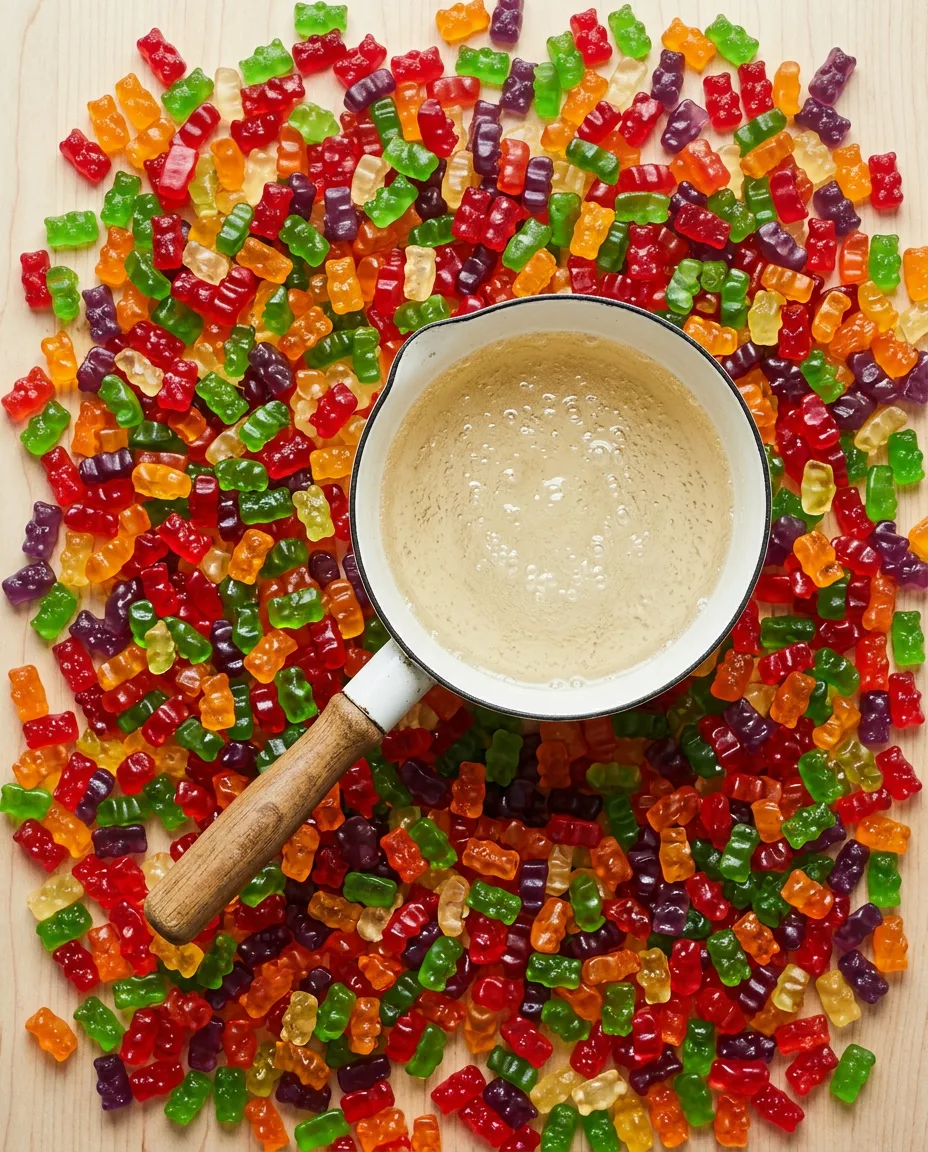
Sugar and glucose syrup need to reach 115°C. That heat drives off water, and less water means a firmer bear.

A small pan of sugar syrup ringed by colourful gummy bearsSave

Gelatin must not be in the pan while that happens. Above roughly 80°C it starts to break down, and broken gelatin sets soft however much of it you used.

Boil the syrup on its own, then. Take it off the heat, let it cool to 70°C, and stir the softened gelatin in.

Most home recipes do the whole thing in one pan to save washing up. That is fine for a soft pastille. It fails for a bear. You can see it happen, too: boiled gelatin throws a thick foam that will not skim off cleanly, and the set underneath comes out slack. A digital thermometer costs less than two ruined batches. Buy one before you buy a second mould.

3

Glucose syrup holds the water in

Swap the glucose for more sugar and the batch turns grainy inside a week. Leave it out in favour of juice and the bears weep by the second day.

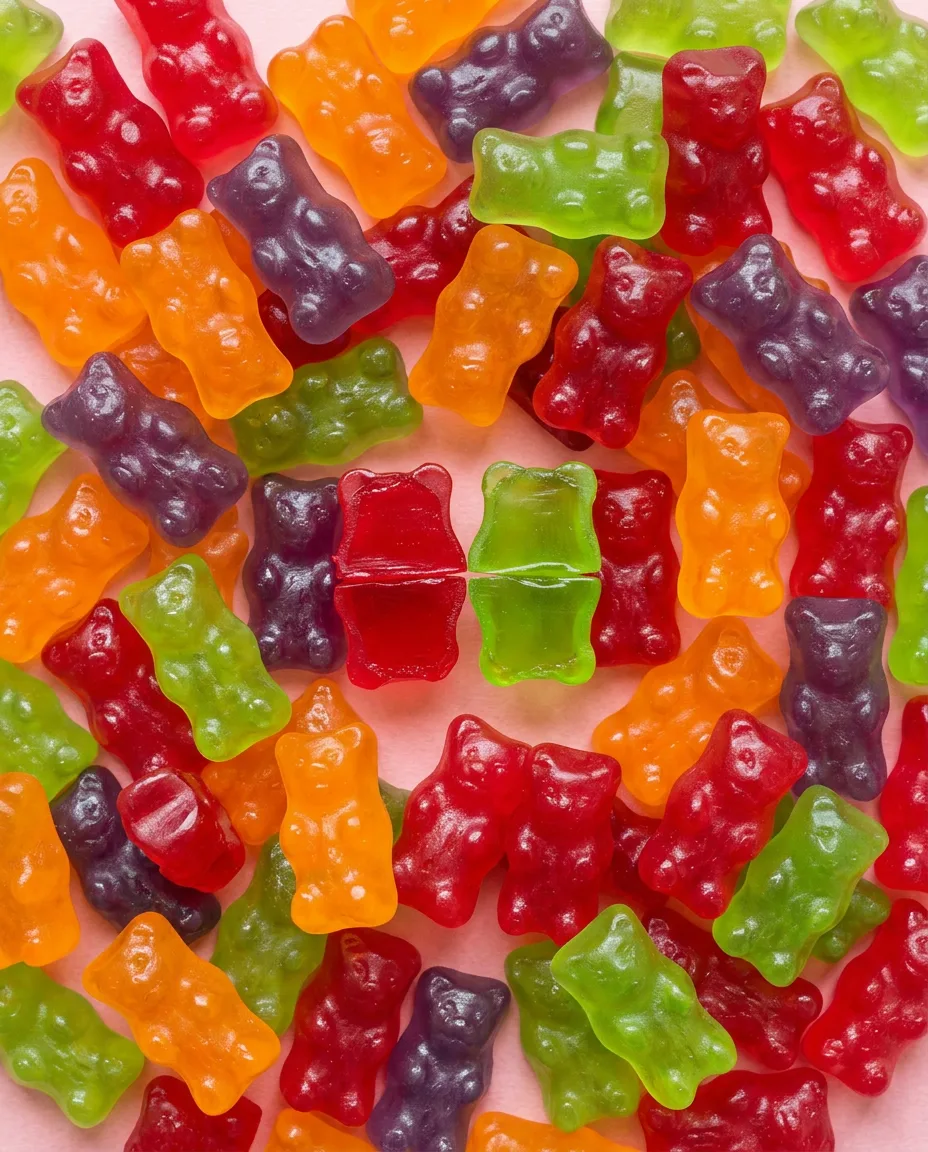
Close view of gummy bears with two cut in half showing a clear interiorSave

Glucose holds on to water that would otherwise travel to the surface. It also stops ordinary sugar from forming grit as the bears sit.

100 grams of each is the split that works. More glucose gives a longer, softer chew. More sugar leaves the surface sandy under a fingertip. Honey is not a straight swap, because it carries about 17 percent water of its own. If you use it, take 20 grams off the liquid and expect a darker bear with a shorter bite.

4

Dry them on a rack, not in the fridge

Chilling sets the gelatin. Drying is what makes a bear keep its shape in a warm room. The fridge works against drying, because it keeps the surface damp.

Gummy bears drying in rows on a wire rackSave

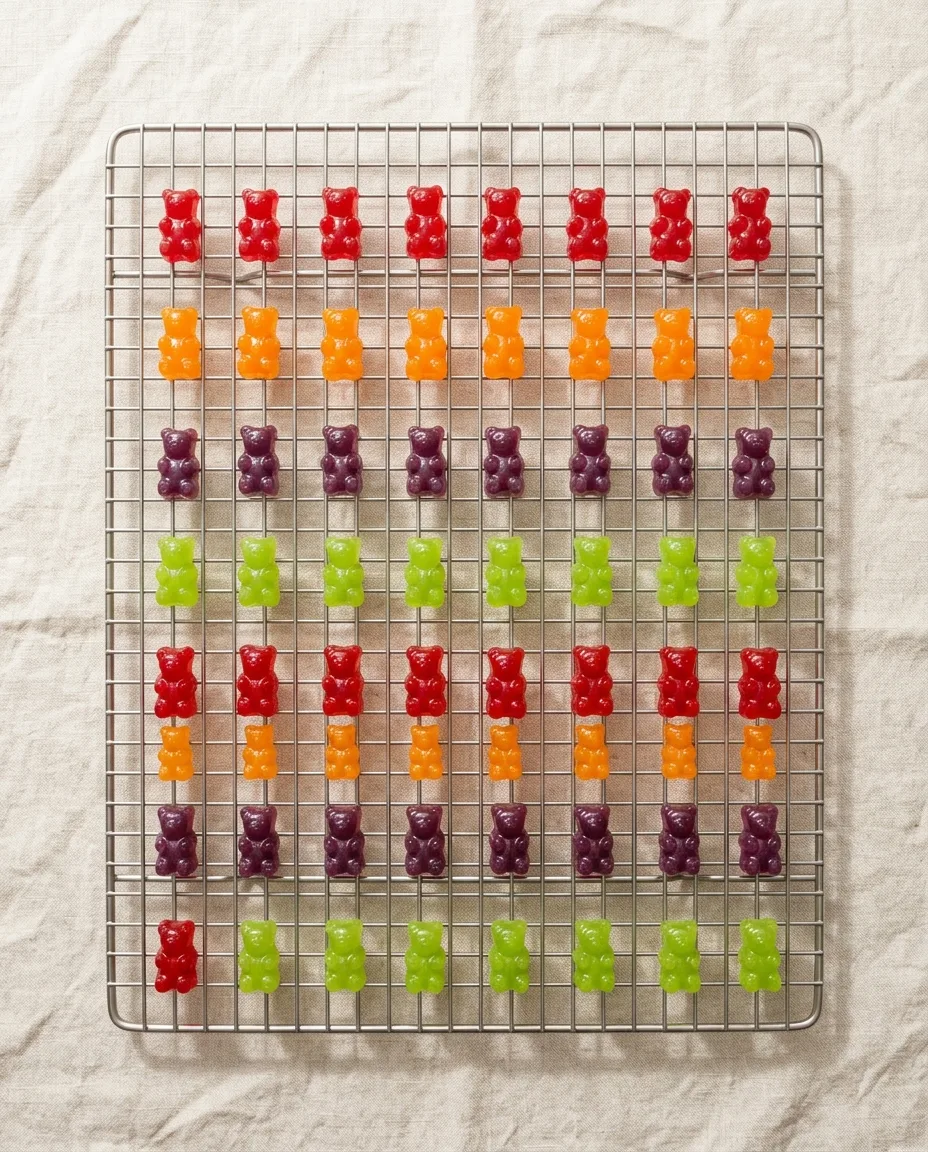
Not the fridge, then. Twenty-five minutes in the cold is enough to unmould cleanly. After that the bears belong on a wire rack, in the coolest dry corner of the kitchen, for 24 to 72 hours. Turn them once a day.

They shrink by about a fifth over that time and the colour deepens. A dried bear dents under a fingernail and springs straight back. An undried one holds the dent. That bear will slump on a sunny windowsill however much gelatin went into it.

5

Add the acid last, and skip some fruit entirely

Citric acid below 60°C is a flavour adjustment. The same acid at 100°C is a wrecking ball, because heat and acid together pull gelatin apart. Two grams stirred in off the heat is the whole job.

Gummy bears beside fresh pineapple, kiwi and mangoSave

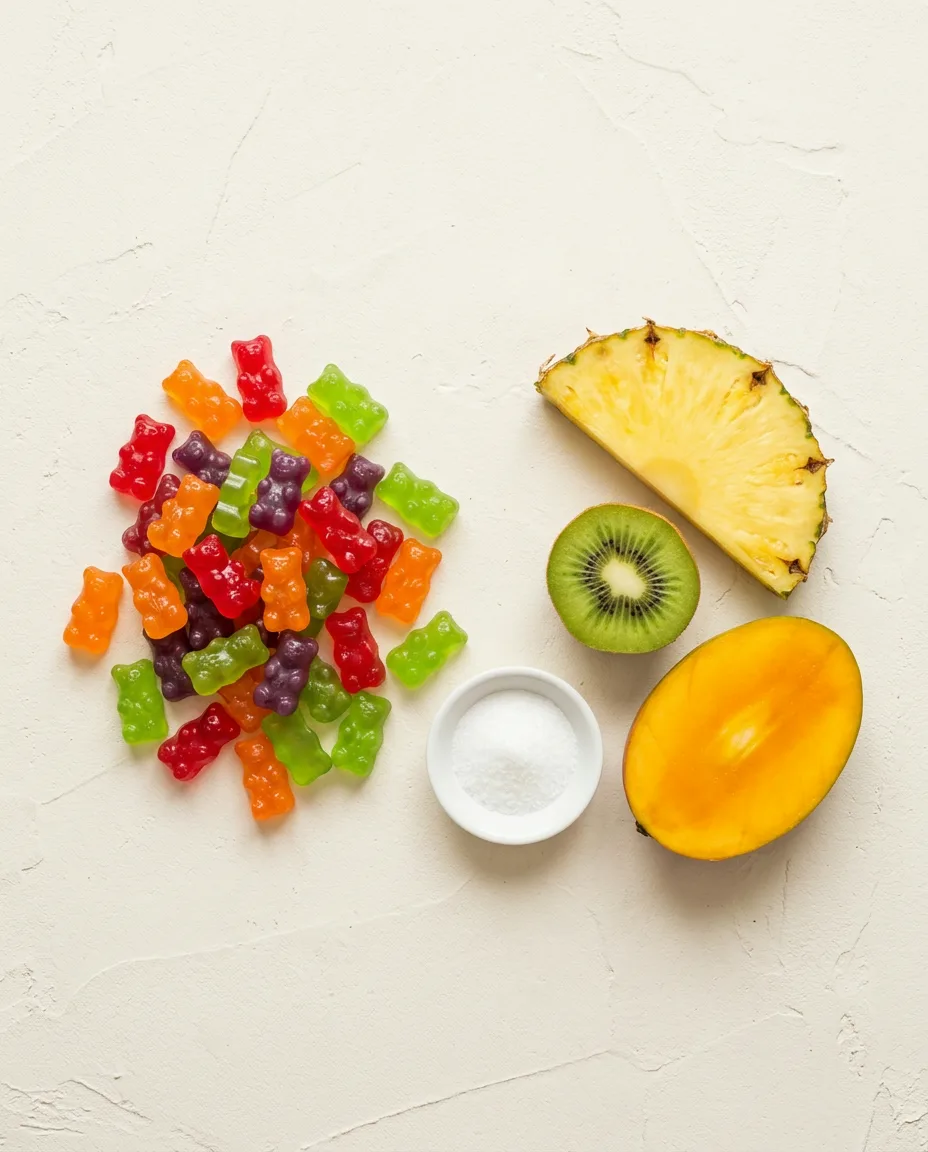
And some fruit cannot go in at all. These carry enzymes that cut gelatin into pieces too small to set:

  • Fresh pineapple
  • Fresh papaya
  • Fresh mango
  • Fresh kiwi
  • Fresh guava
  • Fresh figs

Simmering the purée for five minutes kills the enzyme and lets gelatin work again. You lose the fresh taste that made the fruit worth using. The better route is agar at 1.2 percent of the liquid weight, or low-methoxyl pectin set with calcium.

Neither behaves like gelatin. Agar gives a clean snap instead of a chew. It needs a full rolling boil to dissolve, and it sets as it cools past 40°C rather than in the fridge.

Dried bears in a sealed jar keep about two weeks at cool room temperature. Undried ones live in the fridge and are finished in four days. Neither has preservatives in it, so a jar that turns sticky or smells of yeast goes in the bin.