Chewino
Gummy Bears & Classic Shapes

Grape Gummy Bears That Taste Like the Purple Ones You Remember

The purple bear never tasted like table grapes. Concord juice and tartaric acid are what put it back, and three days on a rack does the rest.

Save
Grape Gummy Bears That Taste Like the Purple Ones You Remember
35 minutes activeActive time
25 minutes chilled, then 3 days curedSet time
About 95 bearsMakes
GelatinBase
IntermediateLevel

One compound does most of the work in grape candy. Methyl anthranilate. It is what makes grape soda and the purple gummy bear taste like each other, and like no grape you can buy loose in a supermarket.

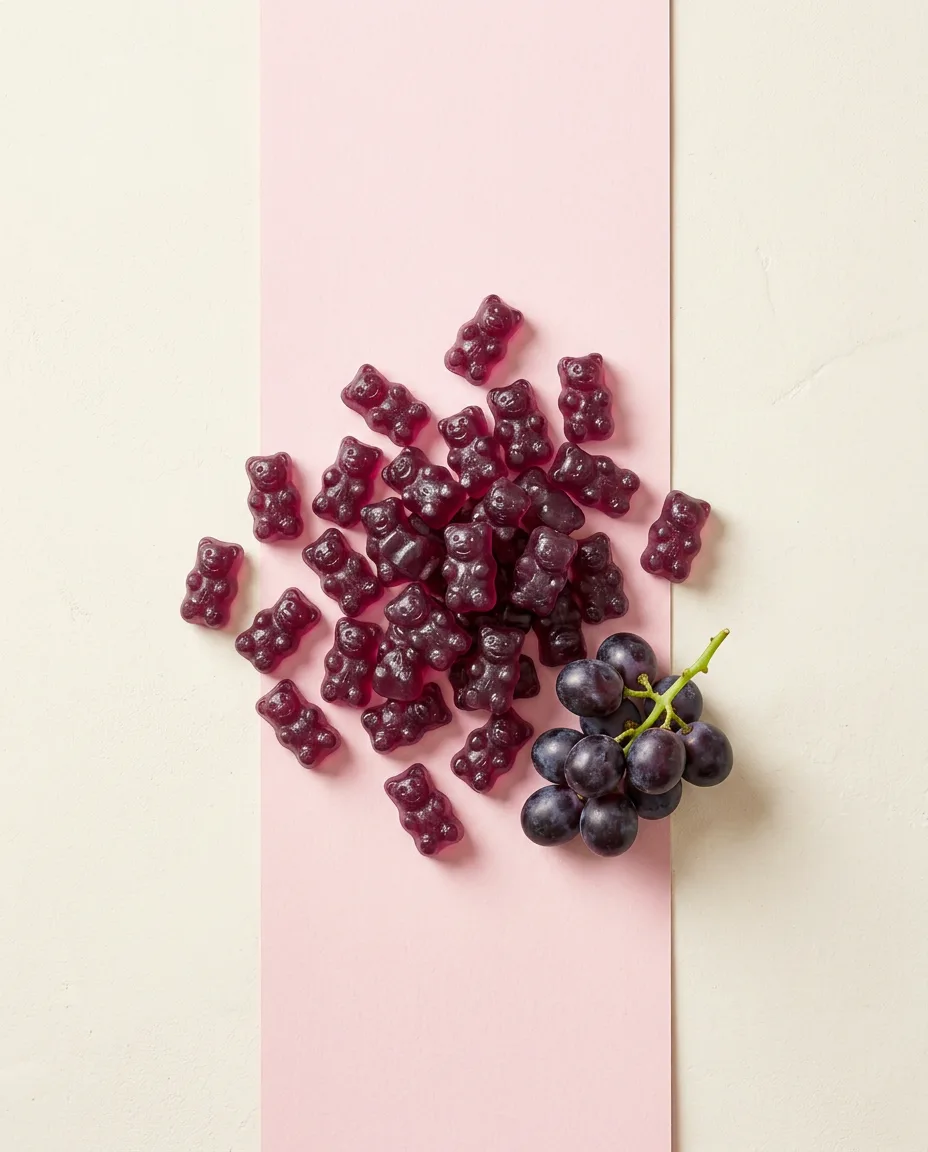
Concord grapes are full of it, which is what that dark North American variety is known for. Table grapes carry almost none. Blend a punnet of seedless green ones and you get a pale sweet gummy that tastes of very little, while a bottle of Concord juice gets you the flavour you actually remember. The juice is the recipe. Everything else is technique.

So this one starts in the juice aisle. Look for 100 percent Concord juice, not grape drink and not a blend that lists apple first.

What you need

  • 180 g Concord grape juice, 100 percent juice, cold
  • 24 g powdered gelatin, 225 bloom (bloom is a firmness rating; supermarket gelatin usually sits near 200 to 225)
  • 90 g granulated sugar
  • 80 g glucose syrup, or light corn syrup
  • 30 g water, for the sugar pan only
  • 2 g tartaric acid, dissolved in 5 g water
  • 0.5 g fine salt
  • 2 silicone bear moulds, 50 cavities each, plus a dropper or squeeze bottle

Method

  1. 1Pour 110 g of the cold juice into a bowl and rain the gelatin over the surface. Leave it 10 minutes, until it looks like wet sand that holds a fingerprint.
  2. 2Put the sugar and the glucose syrup in a small pan with the 30 g of water. Set it over medium heat and bring it to 115 °C without stirring once it is clear.
  3. 3Take the pan off the heat and let it fall to 70 °C. This takes about four minutes.
  4. 4Scrape in the bloomed gelatin and stir slowly until no grains drag on the spoon.
  5. 5Stand the pan for three minutes so the foam gathers, then lift it off with a spoon. Foam sets as a pale scum line across the faces.
  6. 6Stir in the remaining 70 g of cold juice, then the dissolved tartaric acid. The mix should now sit under 60 °C.
  7. 7Fill the moulds with a dropper, slightly overfull. Chill 25 minutes, then turn them out.

Concord juice does the work table grapes cannot

Bottled Concord sets with gelatin without any trouble. Grapes carry no protease, the enzyme in pineapple and mango that chews gelatin apart, so nothing here fights the gel. Pasteurisation would have dealt with it anyway. This is one of the few fruit gummies where gelatin is the obvious base rather than a compromise.

Frozen Concord concentrate works too, and in one way works better. Reconstitute it with half the water the can asks for. Same flavour in less liquid, which means less water to drive out later.

Colour comes free. Concord skins are heavy in anthocyanin, the pigment that also colours blueberries, so the syrup turns deep purple without a drop of dye. It shifts a shade redder once the acid goes in, and that is normal.
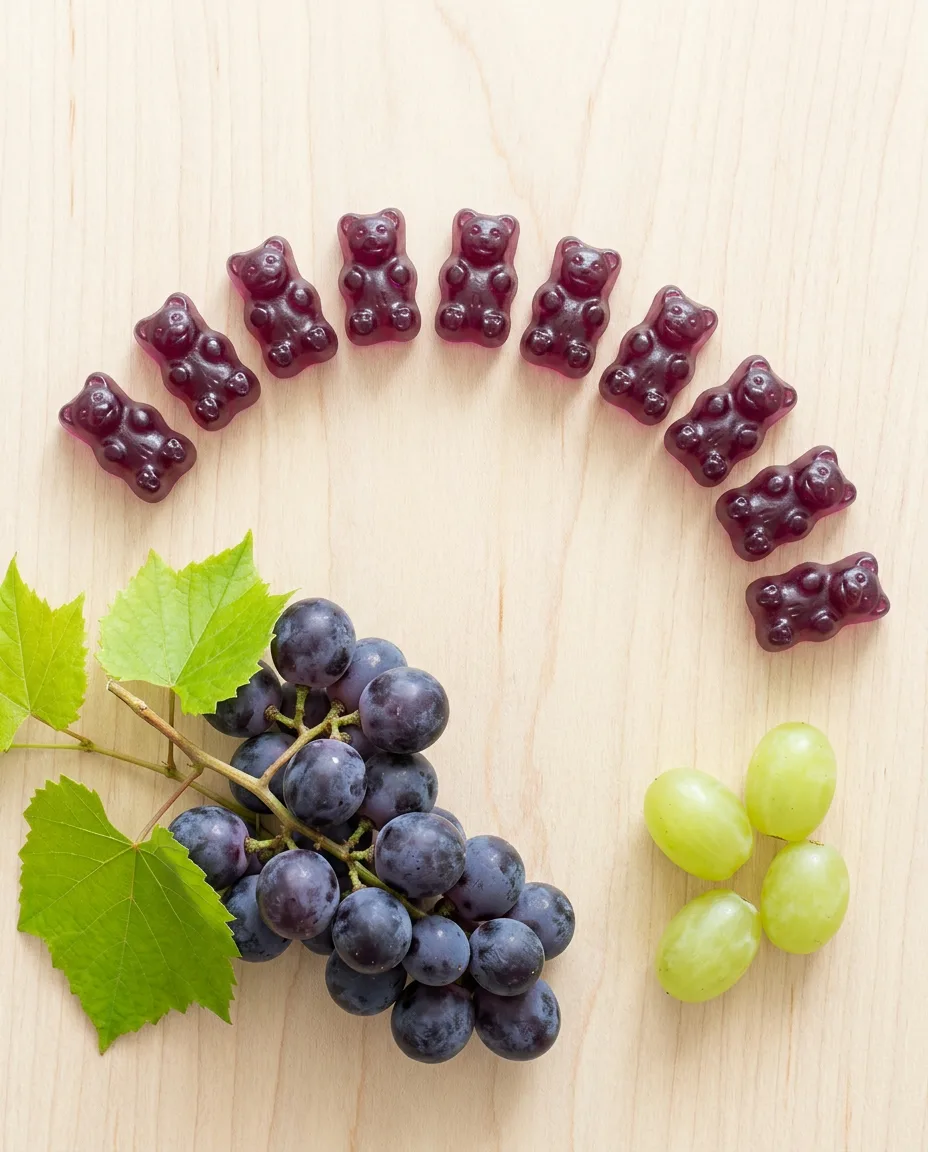
Purple grape gummy bears in a curved line on pale birch beside dark Concord grapes and pale green table grapesSave

What goes in a batch this size

This almost fills two 50-cavity bear moulds, so about 95 bears. Weigh everything, gelatin most of all. A sachet is not a unit of measurement.

Gelatin at 24 g against 180 g of juice works out at 13 percent, which is where a bear holds its ears without going rubbery. Glucose syrup earns its place by stopping the sugar recrystallising. Skip it and the batch turns grainy and cloudy somewhere in week two, whatever else you did right. Honey and maple are not substitutes for it. They bring the wrong sugars and a flavour that argues with the grape.

Keep the juice out of the hot pan

Methyl anthranilate is volatile. Boil the juice and a good part of what you paid for leaves as steam. That is what makes most homemade grape gummies taste flat and jammy, and no amount of extra juice fixes it afterwards. So the sugar gets cooked alone, and the juice goes in cold at the end.

Two temperatures matter in that list and the rest is timing. 115 °C is where the syrup has lost enough water to set firm. 60 °C is the ceiling for the juice and the acid, because gelatin held hot in an acidic mix comes apart and the set weakens by the minute.

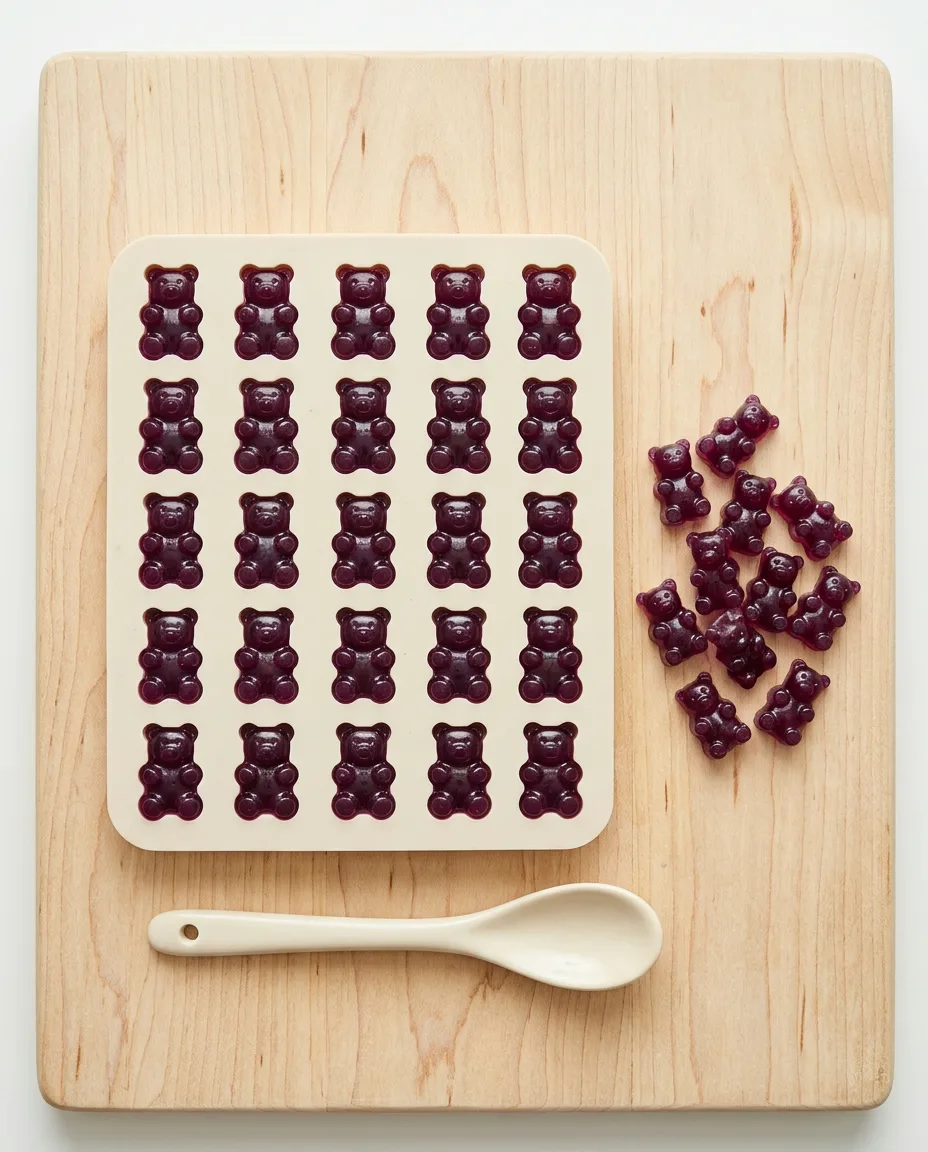
A cream silicone bear mould with every cavity filled with set purple gummy, turned-out bears beside itSave

But they will feel softer out of the mould than a shop bear. That is expected, and the next three days are what fix it. If the syrup starts thickening in the pan before the moulds are full, put it back over the lowest heat for 20 seconds and stir. Do not chase it hot again. Reheating past 70 °C a second time costs more strength than the thickening does, and you cannot see the damage until the bears refuse to firm up.

Tartaric acid is the half most recipes skip

Apples run on malic acid and citrus on citric. Grapes run on tartaric, the acid that crusts on the cork of an old wine bottle. Use citric here and the bears read faintly of lemon sherbet. Close, but wrong. Tartaric tastes like grape skin, and it is the thing that pulls a vague purple sweetness into focus as the flavour you were actually after.

2 g in this batch is a light hand. It sharpens the juice without making anyone wince. Push to 4 g if sour is the point, but add the second half on its own and taste the syrup in between. Acid is much harder to take back out than to put in.

Dissolve it in water first. Dry crystals stirred into a thick syrup sit in pockets, and a pocket of tartaric acid in one bear is unpleasant in a way the other ninety-four are not.

Give them three days on a rack

Out of the mould, a homemade bear is roughly half water. A shop bear is nearer 15 percent. That gap is the whole difference in bite.

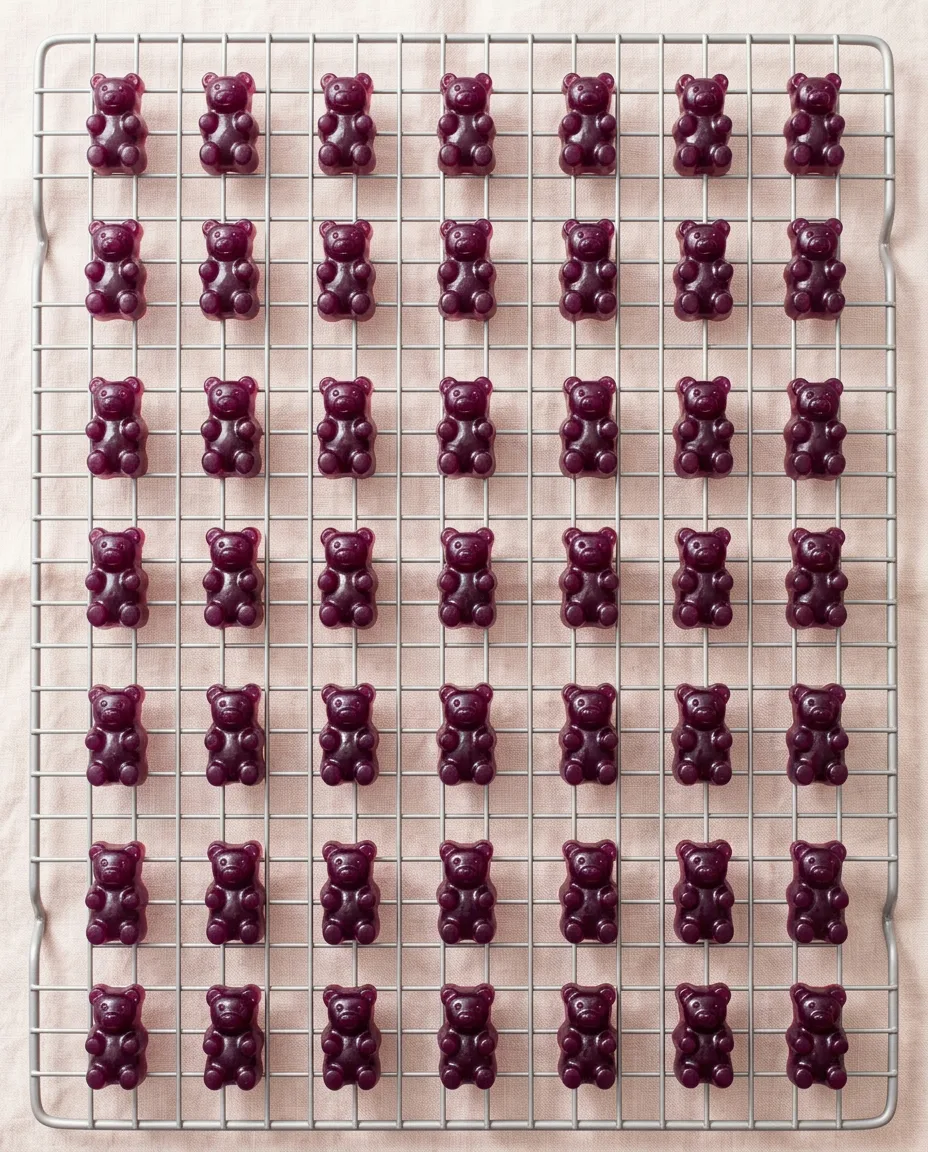
Space them out on a cooling rack so air reaches every side, somewhere cool and dry, and turn them once a day. They shrink by about a quarter over three days and go from wobbly to properly chewy. Four days if the kitchen is humid. If they still dent under a fingernail on day five, the room is too damp, and a dehydrator on its lowest setting will finish the job in a couple of hours. Watch that the setting really is low. Anything above 45 °C starts melting the surface before it dries it.

Purple grape gummy bears spaced in even rows on a wire cooling rack over light linenSave

Curing in the fridge does not work. Cold air in a sealed fridge is damp air, so the bears sit there wet and take on the smell of everything else on the shelf. A wire rack on the worktop, with a loose sheet of paper laid over the top against dust, beats it comfortably.

When a batch goes wrong

Soft after three days usually means too much water rather than too little gelatin. Bottled juice varies more than the label suggests. Hold back 20 g of the cold juice next time and see whether the bite comes up.

Cloudy bears come from foam that never got skimmed, or from stirring hard enough to beat air in. Fold slowly, along the bottom of the pan.

Too much acid, or acid that sat in a hot pan, gives you bears that stay tacky and weep syrup by the second day. The gelatin has partly broken down and cannot hold water any more. Nothing repairs that after the fact. Eat those ones quickly.

White specks through the gel are sugar crystals. Either the glucose syrup went missing or a stray grain on the pan wall seeded the rest. Wipe the sides down with a wet pastry brush while the syrup cooks, and stop stirring once the sugar has dissolved. Stirring a hot sugar syrup is what starts most crystallisation in the first place.

How long they keep

Cured, then stored airtight in the fridge, these hold for about two weeks. At room temperature, closer to five days before the texture goes. But there is no preservative here and no controlled drying, so treat them as a fridge product however firm they feel on day three.

Do not vacuum-seal a batch that is still soft in the middle. Sealing traps the water the cure was meant to remove, and the bears go slick inside a day. Leave the jar open overnight first if you are unsure.

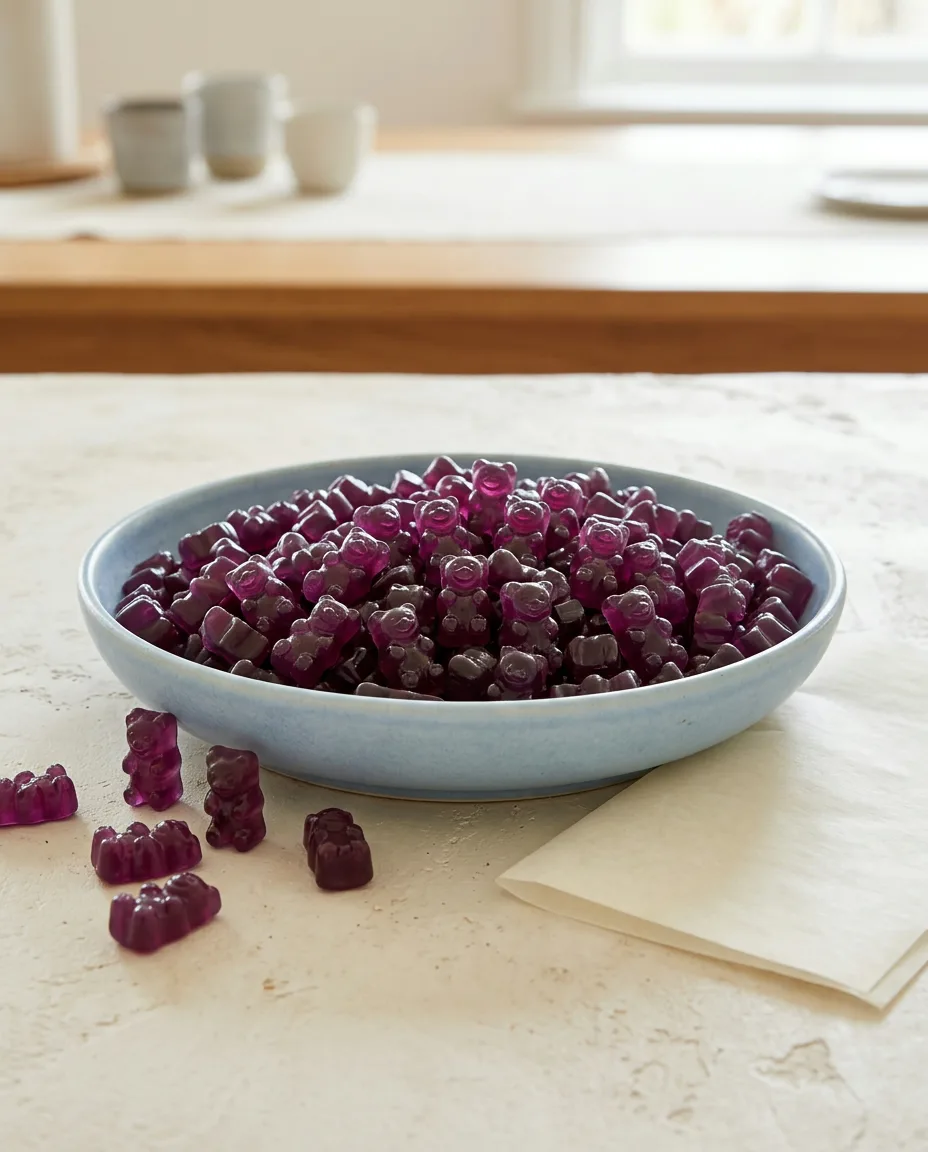
Purple grape gummy bears heaped in a shallow pale blue ceramic dish with a folded square of baking paperSave

Cornflour is the usual answer to a jar that sweats, and a pinch shaken through then tipped back out does help. Better to fix the cause. Put a sheet of baking paper between the layers, because bears stacked straight onto each other fuse at the contact points within a week, and pulling them apart takes the faces off.