Chewino
Gummy Bears & Classic Shapes

Lemon Gummy Bears With Enough Citrus Bite to Make You Blink

Lemon juice is mostly water, so more of it only softens the set. The bite comes from citric acid added off the heat and a sour coat that waits for the cure.

Save
35 minutes activeActive time
30 minutes chilled, then 24 to 48 hours curedSet time
About 150 small bearsMakes
GelatinBase
IntermediateLevel

Most lemon gummy recipes answer the sourness problem by pouring in more lemon juice. That fails, and it wrecks the texture on the way. Lemon juice is about 93 percent water and only 5 to 6 percent acid, so every extra spoonful thins the gelatin faster than it sharpens the taste. Push it far enough and the slab never sets at all.

The bite comes from two other places. Citric acid, stirred in off the heat, does the work inside the bear. A sour coat, applied once the bears have cured, does the rest. Both are cheap. Both need timing more than skill.

What you need

  • 100 g cold water, for blooming the gelatin
  • 25 g powdered gelatin, 200 to 225 bloom (bloom is a firmness rating, and higher numbers set harder)
  • 150 g caster sugar
  • 60 g glucose syrup
  • 30 g water, for the syrup
  • 45 g lemon juice, strained, from about two lemons
  • 4 g citric acid
  • 1 g fine salt
  • Zest of 2 unwaxed lemons
  • 30 g caster sugar, for the sour coat
  • 15 g citric acid, for the sour coat

Method

  1. 1Rub the lemon zest into the 150 g of caster sugar with your fingertips until the sugar turns damp and smells strongly of peel. Leave it for 20 minutes.
  2. 2Scatter the gelatin over the 100 g of cold water in a bowl. Do not stir it. Leave it 10 minutes, until it has swollen into one solid rubbery block.
  3. 3Tip the lemon sugar into a small pan. Add the glucose syrup and the 30 g of water, then warm it over a low heat, stirring, until the sugar has fully dissolved and the syrup runs clear. Keep it below a boil.
  4. 4Pull the pan off the heat and let it drop to about 75°C, which takes two or three minutes. Add the bloomed gelatin and stir until no grain is left on the back of the spoon.
  5. 5Let it cool to 60°C. Stir the citric acid and the salt into the lemon juice until both dissolve, then pour that into the pan and stir it through.
  6. 6Skim the foam off the surface with a spoon. Foam sets opaque and spoils the clarity.
  7. 7Pour the mixture into a jug and fill the bear moulds to the top of each cavity. Work quickly, because the mixture starts thickening below 50°C.
  8. 8Chill for 25 to 30 minutes, until a bear feels firm under a fingertip and lifts out cleanly.
  9. 9Set them on a rack, spaced apart, and leave them at room temperature for 24 to 48 hours.

More juice is not more sour

Taste a lemon straight and your face does the work for you. Taste that same juice spread through 400 g of sweetened gelatin and it nearly disappears. Dilution is the whole story. A batch this size holds 45 g of juice, which works out at barely 2 g of real acid. To match a commercial sour bear on juice alone you would need roughly a third of the batch weight in juice. Gelatin will not set against that much water at that low a pH, so the recipe collapses before the flavour arrives.

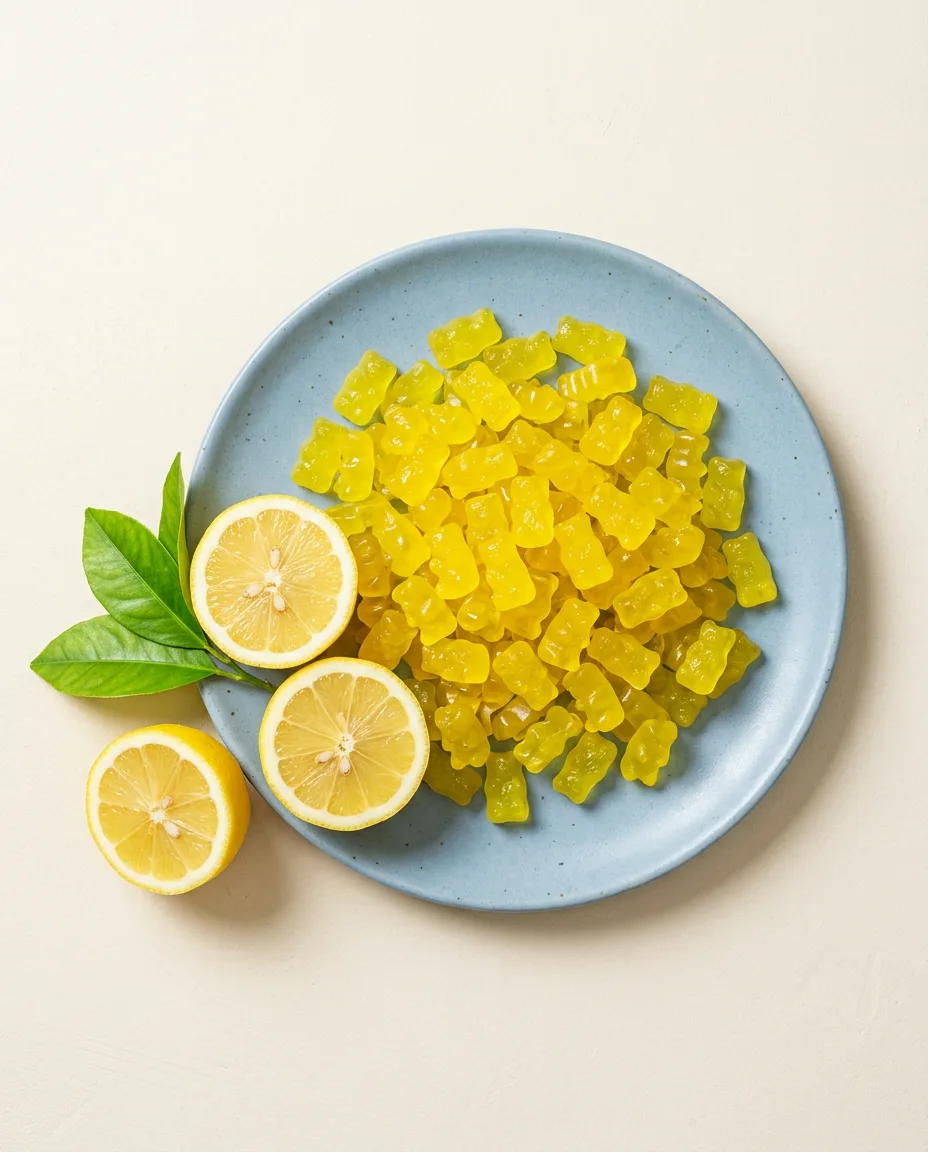
A heap of glossy yellow lemon gummy bears on a pale blue plate beside two cut lemon halvesSave

Citric acid is the shortcut. It is the same acid the lemon already contains, sold dry, and 4 g of it carries further than 80 g of juice. The juice still goes in, because it brings a fruit flavour the powder has none of. It just stops being the thing doing the sour.
What goes in the pan

Weigh everything before the pan goes on the heat. Once the syrup is warm you have a few minutes to work in, and hunting through a cupboard for the citric acid tin is how a batch gets overcooked.

Glucose syrup is optional in the way a seatbelt is optional. Leave it out and the sugar slowly crystallises inside the bears over a few days, turning them gritty from the middle outwards. Corn syrup does the same job. Golden syrup will stand in, though it tints the colour and brings a flavour of its own.

Work the batch in this order

Order matters more than technique here. Sugar and heat come first. Gelatin goes in second, and the acid goes in last, once the pan has cooled enough to stop hurting it.

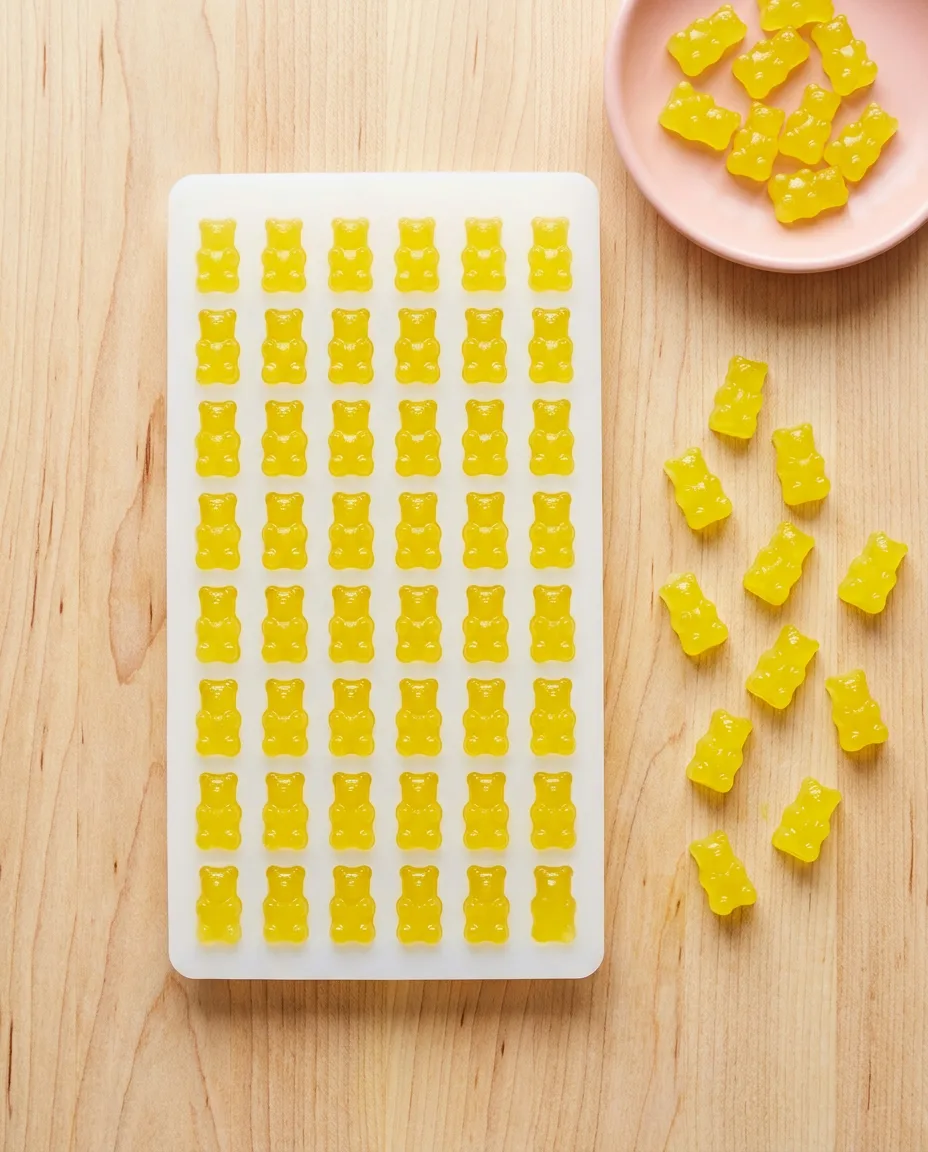
Set yellow gummy bears in a white silicone bear mould with finished bears scattered on the board beside itSave

This makes roughly 150 small bears, so a 50-cavity mould gets filled three times. Keep the jug somewhere warm between fills. A jug that cools on the counter sets into a plug, and reheating it undoes some of the care taken with the acid.

Acid goes in last, and under 65°C

Thirty minutes at pH 3 in a hot pan can cost a third of the setting strength. Gelatin is a protein, and acid plus heat pulls it apart. The technical word is hydrolysis. What it looks like in a kitchen is a mixture that pours beautifully and then never firms up. The bears leave the fridge soft and slump on the rack over the next hour. Add the same acid at 60°C and fill the moulds within ten minutes, and the damage barely registers. Time counts as much as temperature, so a slow cool with the juice already in is worse than a brisk one.

So the rule is short. Nothing acidic goes near the pan while the pan is on the heat, and that includes the lemon juice, which is sharp enough on its own to do damage over a long simmer.

If batches keep coming out slack even with the acid added late, stir 1 g of sodium citrate into the syrup. It is a buffer, which means it holds the pH a little higher without flattening the sour taste much. Supermarkets rarely stock it. Online it costs very little and a bag lasts years.

Zest carries the smell, juice carries the water

Almost everything you recognise as lemon is smell rather than taste. The smell lives in the oil in the peel. Not in the juice. Rubbing zest into sugar pulls that oil out and holds it there, and you can watch the sugar go damp as it happens. Most home recipes skip the step, and it costs nothing but 20 minutes of standing time. Skip it and the bears land sour and vaguely sweet, with the fruit missing from the middle.

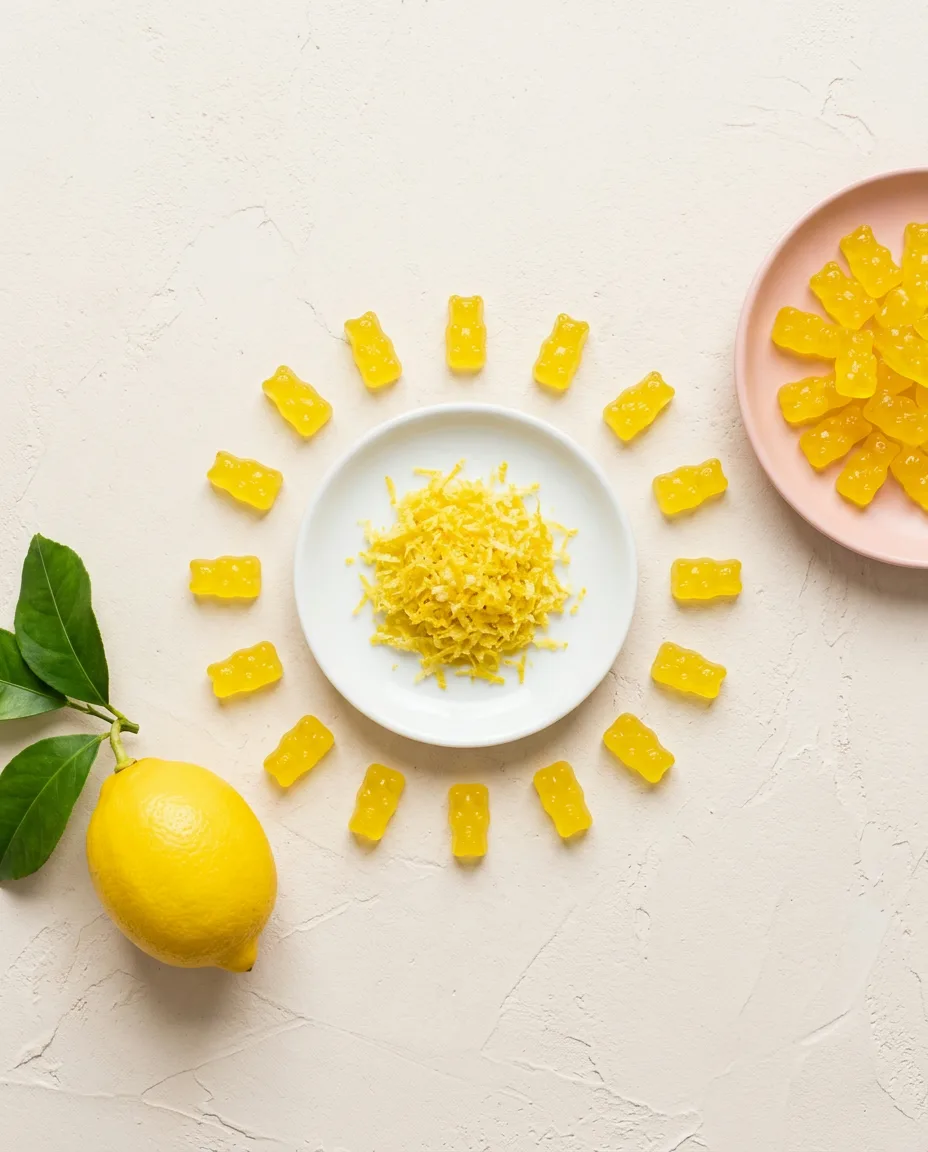
Freshly grated lemon zest on a white saucer ringed by yellow gummy bearsSave

Use unwaxed lemons where you can, and take only the yellow layer. The white pith underneath is bitter, and no amount of cooking removes that later. A microplane grater lifts the zest and leaves the pith behind. A box grater takes both and you taste it.

Cure first, coat at the last minute

Straight out of the mould a bear is too wet to hold a sour coat. Sugar and citric acid are both hungry for water, so they pull moisture out of the surface and dissolve into a sticky film within the hour. Curing is what fixes it. Two days on a rack drops the surface water far enough that the coat sits dry and powdery. Space them so none of them touch, and turn them once on the second morning. A humid kitchen slows the whole thing down and may want a third day.

Mix 30 g of caster sugar with 15 g of citric acid for the coat itself. That 2:1 ratio is sharp without being silly. Push it to 1:1 and you are into the range that makes people cough. Toss a handful of bears through a bowl of it, shake off what does not stick, and serve them the same day.

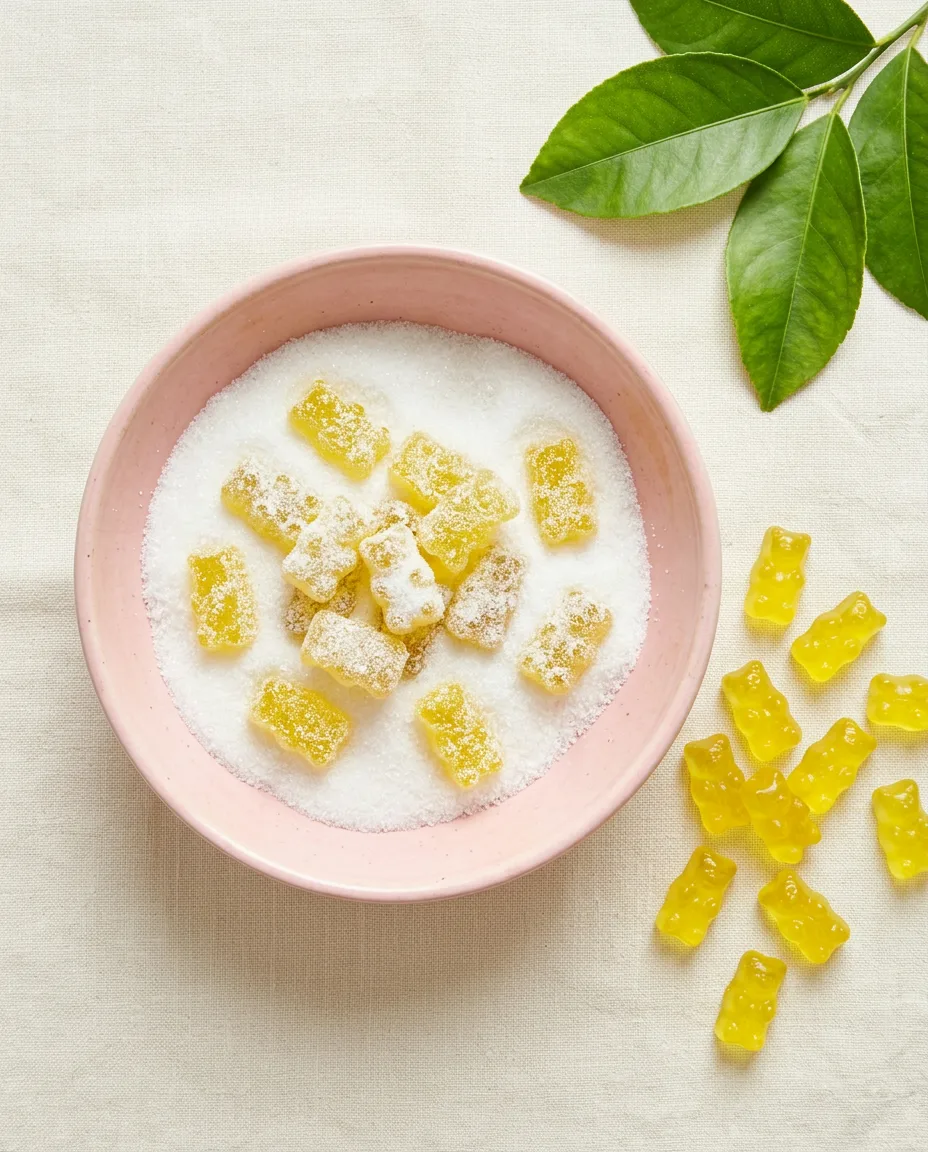
Yellow gummy bears tossed through white sour sugar in a pink bowl, some frosted and some still glossySave

Malic acid is worth hunting down if sourness is the point. Citric hits fast and fades fast. Malic holds on longer, which is why sour sweets almost always blend the two. Swap 5 g of the citric in the coat for malic and taste it against the plain version before you commit a whole batch.

Four ways a lemon batch goes wrong

Slack bears that never firm up mean the acid went in too hot, or sat in a hot pan too long. Nothing rescues a batch once the gelatin has broken down. Start again and check the pan temperature before the juice goes anywhere near it.

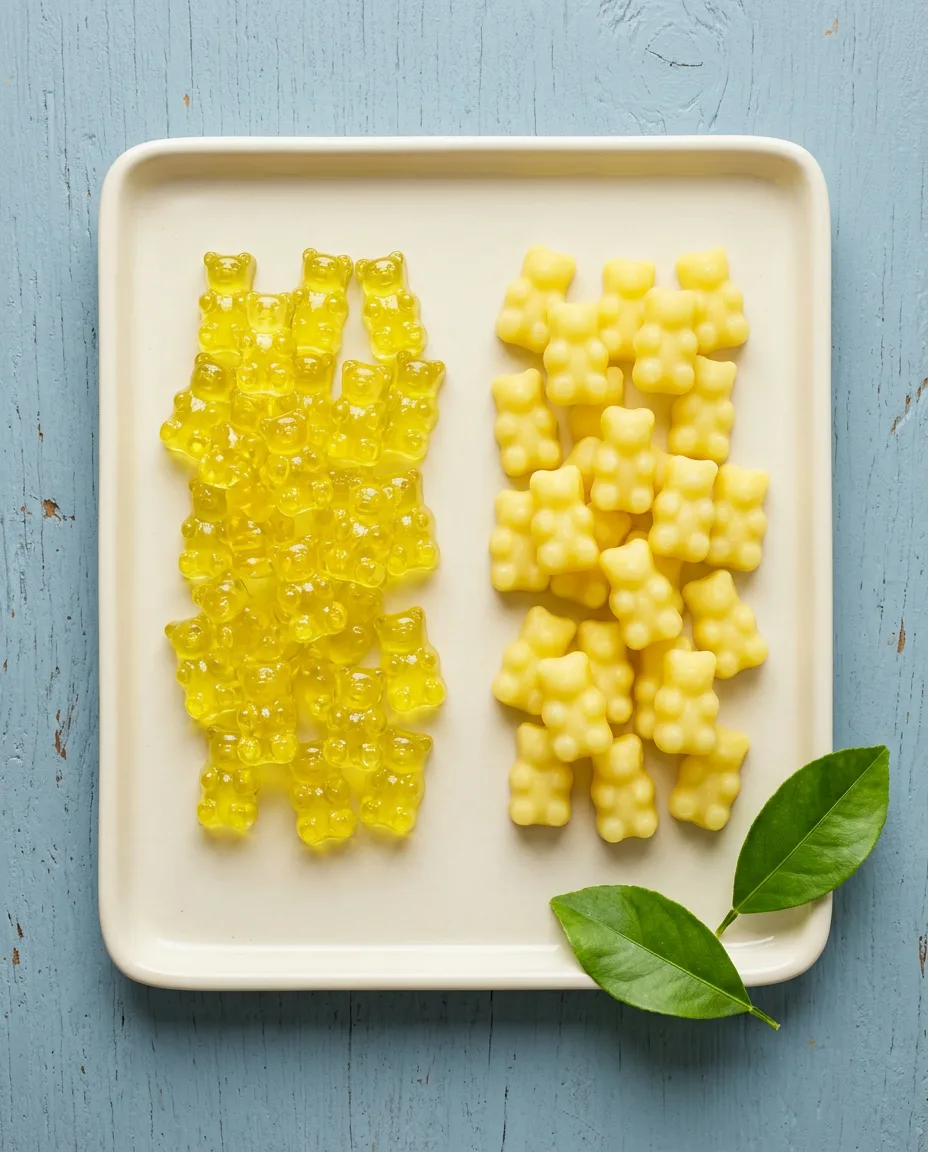
Cloudy bears usually come from unskimmed foam, though undissolved sugar does it too. Hold the pan on a low heat a minute longer next time and watch the syrup go from grainy to glassy before you take it off.

A sandy, gritty texture after a week is crystallised sugar, which means the glucose syrup was left out or short-measured. Weeping bears in a sealed tub went in before they had finished curing. Neither is a fault in the recipe, and both get blamed on it.

And bears stuck fast in the mould are nearly always underchilled rather than overfilled. Give them another ten minutes cold before you start fighting them.

Clear glassy yellow gummy bears beside a cloudy opaque batch on a pale cream traySave

How long they keep

Uncoated, in an airtight tub in the fridge, these hold for about two weeks. That is a real number rather than a cautious one. Homemade gummies carry no preservative and far more free water than a factory bear, which is why the shop version sits on a shelf for a year and this one cannot.

Coated bears run on a much shorter clock. The sour layer starts drawing water out of the bear the moment it goes on, and by day three it has usually turned to syrup in the tub. Coat only what you are about to put out. Keep the rest bare and cold, and dress the next handful when you want them.